
Grayson County Urgent Care: Your 2026 Guide to Immediate Medical Needs
Key Takeaways
- Urgent care centers bridge the gap between your primary care physician and the emergency room, treating non-life-threatening illnesses and injuries that require prompt attention.
- In 2026, a typical Grayson County urgent care can handle conditions like colds, flu, sprains, minor cuts, and infections, and often provide on-site X-rays and lab tests.
- Always choose the emergency room (ER) for severe conditions such as chest pain, difficulty breathing, major trauma, or signs of a stroke.
- When selecting an urgent care, consider factors like location, hours, services offered, insurance accepted, and patient reviews to ensure it meets your specific needs.
- Understanding the cost, which includes copays and potential self-pay rates, before your visit can help you manage your healthcare expenses effectively.
When an unexpected illness or injury occurs, knowing where to turn for medical help is crucial. For residents of Sherman, Denison, and the surrounding areas, the decision often comes down to choosing between a primary care doctor, an urgent care clinic, or a hospital emergency room. This guide for 2026 is designed to demystify the process, helping you understand the vital role of urgent care and how to navigate your options for immediate medical services in the region.
Finding reliable and timely medical attention is a top priority for any family. This resource will provide a clear, comprehensive overview of what to expect from a Grayson County urgent care facility, empowering you to make informed decisions for your health.
What is Urgent Care and When Should You Go?
Urgent care centers are medical facilities designed to treat illnesses and injuries that are serious enough to require immediate attention but are not life-threatening. They serve as a crucial middle ground, offering a convenient and affordable alternative when your primary care physician’s (PCP) office is closed or when your condition doesn’t warrant a visit to the emergency room (ER).
Think of it this way: your PCP is for routine check-ups, managing chronic conditions, and preventive care. The ER is for true emergencies that pose a risk to your life or could lead to permanent disability. Urgent care fills the significant gap in between. You should consider visiting a Grayson County urgent care for conditions like a persistent cough, a sprained ankle, a minor cut that needs stitches, or a urinary tract infection.
Urgent Care vs. Emergency Room vs. Primary Care
Understanding the distinct role of each healthcare option is key to receiving the right level of care efficiently. Using the wrong facility can lead to longer wait times and significantly higher costs, especially if you use an ER for a non-emergency condition. Here is a breakdown to help you choose wisely.
| Type of Facility | Best For | Common Conditions Treated | Key Advantage |
|---|---|---|---|
| Primary Care Physician (PCP) | Routine, preventive, and long-term care. | Annual physicals, managing chronic diseases (diabetes, high blood pressure), vaccinations, non-urgent symptoms. | Continuity of care with a doctor who knows your medical history. |
| Urgent Care Center | Non-life-threatening issues that need prompt attention. | Colds, flu, sore throat, ear infections, sprains, minor cuts and burns, UTIs, rashes. | Convenience (walk-ins, extended hours) and lower cost than an ER. |
| Emergency Room (ER) | Life-threatening or limb-threatening emergencies. | Chest pain, difficulty breathing, severe bleeding, stroke symptoms, major fractures, head trauma. | Access to specialists and advanced life-saving equipment 24/7. |
What Medical Conditions Are Treated at Grayson County Urgent Care Centers?
Urgent care centers are equipped to handle a wide spectrum of common medical issues. Their goal is to diagnose and treat conditions that need prompt evaluation but are not severe enough to be considered true emergencies. This versatility makes them an invaluable community resource. Most modern facilities offer a blend of services for general illness, minor trauma, and diagnostic testing.
Common Illnesses
These are some of the most frequent reasons patients seek immediate medical attention. A well-equipped Grayson County urgent care can diagnose and provide treatment plans, including necessary prescriptions, for these conditions.
- Colds, coughs, and flu-like symptoms
- Sore throats and strep throat (with on-site testing)
- Ear infections and sinus infections
- Allergies and asthma-related issues (minor attacks)
- Bronchitis and pneumonia (mild to moderate cases)
- Urinary Tract Infections (UTIs)
- Pink eye and other minor eye irritations
- Rashes, poison ivy, and other skin conditions
- Stomach viruses, nausea, and dehydration (requiring IV fluids)
Minor Injuries
Accidents happen, and urgent care is often the best first stop for injuries that are painful but not catastrophic. These facilities are set up to evaluate and treat a variety of minor traumas.
- Sprains and strains
- Minor broken bones (fingers, toes)
- Cuts and lacerations that require stitches
- Minor burns
- Animal bites and insect stings
- Splinter removal
- Back pain from a minor injury
Diagnostic and Preventive Services
Many urgent care centers also offer services that go beyond treating immediate symptoms, providing convenient options for diagnostics and routine health needs.
- On-site X-rays for diagnosing fractures and pneumonia
- Basic lab services (blood work, urinalysis)
- STD testing
- Flu shots and other vaccinations
- Sports and school physicals
- Pre-employment physicals and drug screening
How Do I Find the Right Urgent Care in Grayson County?
With several options available, choosing the right facility involves more than just finding the closest one. To ensure you receive the best care for your specific situation in 2026, consider the following factors before you walk in.
1. Location and Hours of Operation: Proximity is important, especially when you are not feeling well. Look for a center that is easy to get to. Equally important are the hours. Many urgent care centers offer extended evening and weekend hours, which is a major advantage over standard PCP offices.
2. Services Offered: Not all urgent care centers are created equal. If you suspect you have a broken bone, you need a facility with on-site X-ray capabilities. If you need a specific lab test, call ahead to confirm they offer it. Providers like Sherman Medical often list their available diagnostic and treatment services online, making it easy to check beforehand.
3. Insurance Acceptance: Healthcare costs can be a major concern. Before your visit, verify that the urgent care center is in-network with your health insurance plan. You can usually do this by checking the clinic’s website or calling the number on the back of your insurance card. Visiting an out-of-network provider can result in significantly higher out-of-pocket costs.
4. Self-Pay Options: If you do not have insurance, ask about their self-pay rates. Many centers offer transparent, upfront pricing for common services, which can be much more affordable than an ER visit.
5. Provider Credentials and Reviews: Look for centers staffed by board-certified physicians, physician assistants (PAs), and nurse practitioners (NPs). Reading online patient reviews can also provide valuable insight into wait times, staff friendliness, and the overall quality of care.
What Can I Expect During My Visit to a Grayson County Urgent Care?
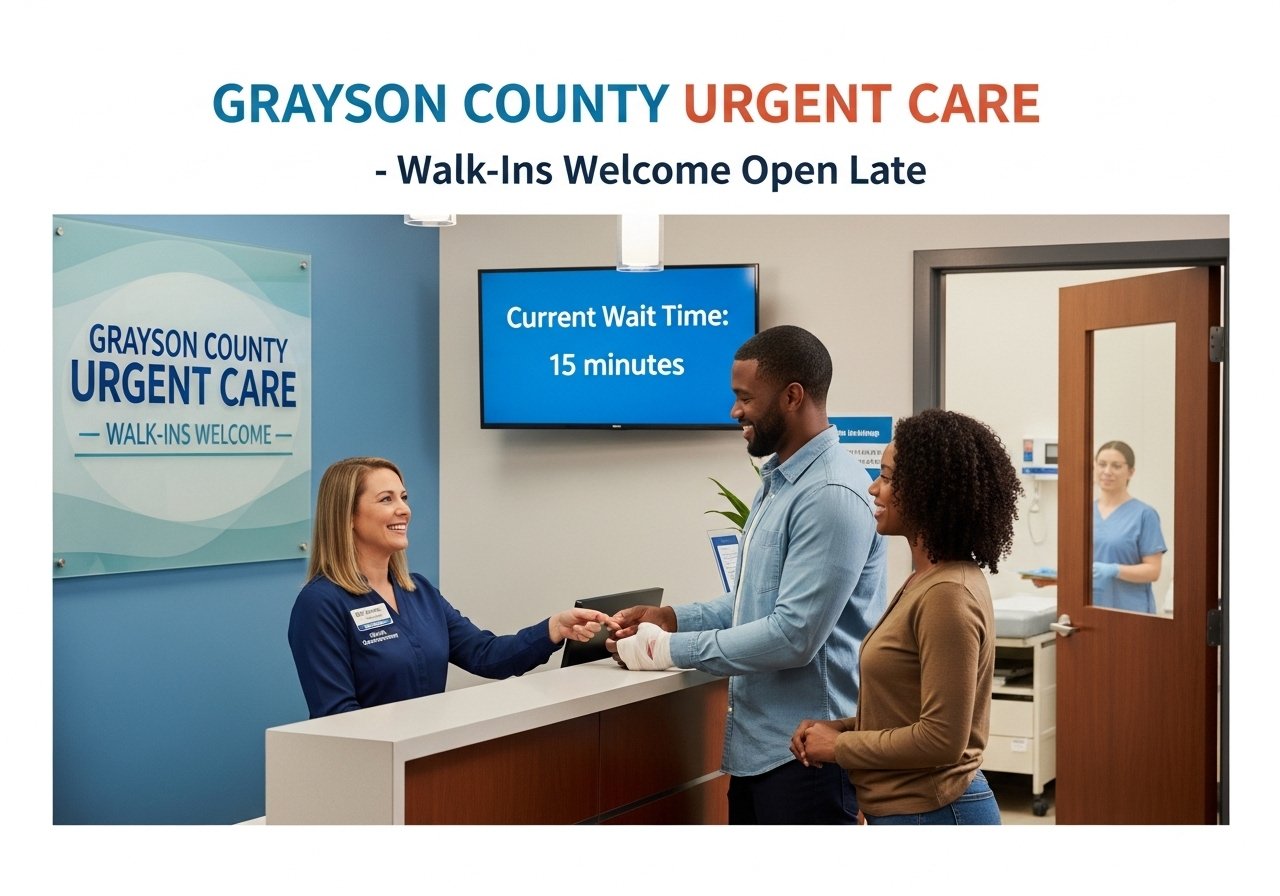
If you’ve never been to an urgent care center, the process is straightforward and designed for efficiency. Knowing what to expect can help reduce any anxiety associated with a medical visit.
The typical patient journey follows these steps:
- Check-In: Upon arrival, you will approach the front desk. You will need to present a photo ID, your health insurance card, and a form of payment for your copay. You will also fill out paperwork regarding your medical history, current symptoms, and consent for treatment.
- Triage: A nurse or medical assistant will call you back to a triage area. They will take your vital signs—blood pressure, temperature, heart rate, and oxygen level. They will also ask you to describe your symptoms and the reason for your visit. This initial assessment helps the medical team prioritize patients based on the severity of their condition.
- Examination: You will then be moved to an examination room to wait for a healthcare provider. A physician, PA, or NP will conduct a physical exam, discuss your symptoms in more detail, and ask follow-up questions to understand your condition fully.
- Diagnosis and Treatment: Based on the examination, the provider may order diagnostic tests, such as an X-ray, a strep test, or blood work. Once a diagnosis is made, they will discuss a treatment plan with you. This could include a prescription for medication, instructions for at-home care, or a procedure like stitches for a cut.
- Checkout and Follow-Up: After your treatment, you will proceed to the checkout desk. You will receive copies of your visit summary, any prescriptions will be sent to your pharmacy, and you will get instructions for any necessary follow-up care. They will often recommend following up with your primary care physician.
How Much Does Urgent Care Cost in Grayson County?
The cost of a visit to a Grayson County urgent care center is generally much lower than a comparable visit to an emergency room. However, the final price can vary based on several factors, including your insurance plan and the specific services you receive.
For patients with insurance, the primary out-of-pocket expense is typically the copay, which is a fixed amount you pay for a medical visit. Urgent care copays are usually higher than a PCP visit but significantly lower than an ER copay. Your visit is also subject to your plan’s deductible and coinsurance. For clear definitions of these terms, you can reference the HealthCare.gov Glossary, a reliable resource for understanding health insurance terminology.
For those without insurance or with high-deductible plans, most urgent care centers offer self-pay pricing. A basic visit might range from $100 to $200, but this does not include the cost of additional services like X-rays, lab tests, or procedures like stitches. It is always a good idea to ask for a price list or estimate before receiving services.
What are the Benefits of Using an Urgent Care Center?
Urgent care centers have become an integral part of the modern healthcare landscape for several compelling reasons. They offer a unique combination of convenience, affordability, and quality care that serves the needs of the community.
- Cost-Effectiveness: For the same condition, a visit to an urgent care center can be a fraction of the cost of an emergency room visit. This helps both patients and the healthcare system save money.
- Convenience and Accessibility: With walk-in appointments and hours that extend into evenings and weekends, urgent care provides medical help when traditional doctors’ offices are closed. This accessibility is a major benefit for busy families and individuals.
- Reduced Wait Times: The average wait time at an urgent care center is typically under an hour, whereas ER wait times can stretch for many hours, especially for non-critical conditions.
- Comprehensive On-Site Services: The ability to get an X-ray, lab work, and a prescription filled all under one roof is a significant advantage. Comprehensive providers, such as local clinics and facilities like Sherman Medical, offer a streamlined experience that saves patients time and effort.
- Alleviating ER Overcrowding: By treating patients with less severe conditions, urgent care centers help reduce the burden on local emergency rooms, allowing them to focus on the most critical, life-threatening cases.
When Should I Go to the Emergency Room Instead of Urgent Care?
While urgent care is an excellent resource, it is critical to recognize the signs of a true medical emergency. Attempting to treat a life-threatening condition at an urgent care facility can delay necessary treatment and lead to poor outcomes. You should always call 911 or go directly to the nearest hospital emergency room for any of the following symptoms or conditions.
According to experts like the American College of Emergency Physicians (ACEP), these signs warrant an immediate ER visit:
- Signs of a Heart Attack: Chest pain or pressure, shortness of breath, pain radiating to the arm, jaw, or back.
- Signs of a Stroke: Sudden numbness or weakness (especially on one side of the body), confusion, trouble speaking or seeing, severe headache.
- Severe Breathing Difficulties: Inability to speak in full sentences, gasping for air.
- Uncontrolled Bleeding: Bleeding that does not stop after 10 minutes of direct pressure.
- Major Trauma: Severe head injuries, deep wounds, major broken bones (especially if the bone is visible), or serious burns.
- Loss of Consciousness: Any fainting spells or periods of unresponsiveness.
- High Fever in a Newborn: Any fever in an infant less than 3 months old.
- Severe Abdominal Pain: Sudden and intense pain, particularly in the lower right quadrant (a sign of appendicitis).
Choosing the right facility for your medical needs in 2026 is a key part of managing your health. By understanding the capabilities and purpose of a Grayson County urgent care, you can ensure you receive fast, appropriate, and affordable treatment for non-life-threatening conditions, saving the emergency room for true life-or-death situations.